
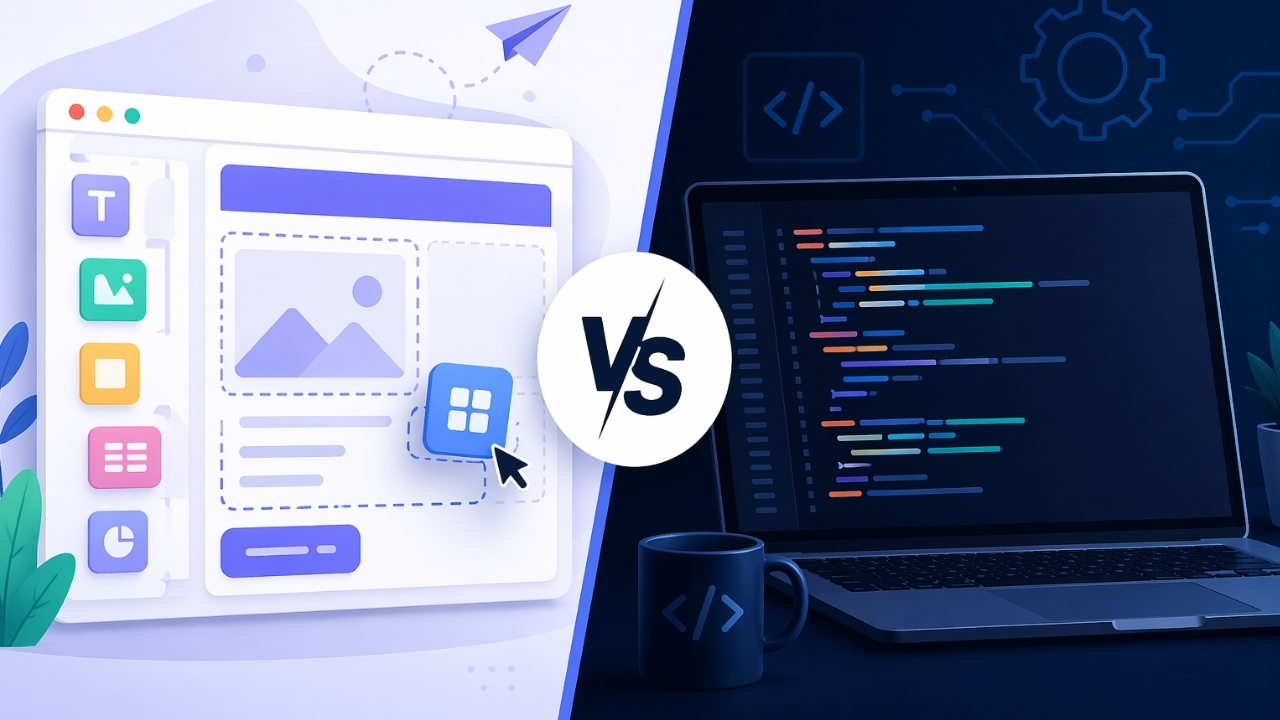
No-Code vs Custom Development: What You Need to Know
When building a digital product, one key decision is how it should be created. Two common approaches are no-code development and custom development. Each comes with its own strengths and trade-offs, depending on the situation.
No-Code Development
No-code tools let users build applications using visual interfaces instead of programming. They are often used for simple products or early-stage ideas.
Benefits
Fast to Launch
Products can be created and released in a short time.
Lower Starting Cost
You can begin without investing heavily in a development team.
Simple to Use
People without coding experience can still create working solutions.
Easy Changes
Updates and edits can be done quickly.
Drawbacks
Limited Control
You cannot go beyond the features provided by the platform.
Growth Constraints
It may become difficult to support complex needs later.
Dependence on Platform
You rely on the provider for updates, pricing, and stability.
Possible Performance Issues
Large or demanding applications may not perform well.
Custom Development
Custom development means building software from the ground up using code. It is typically handled by developers and is suited for more complex needs.
Benefits
High Flexibility
You can design features based on exact requirements.
Handles Growth Better
Systems can be built to support increasing demand.
Efficient Performance
Applications can be optimized for speed and reliability.
Full Control
You own and manage the entire system.
Drawbacks
Higher Cost
It requires more financial investment.
Takes More Time
Development and testing take longer.
Maintenance Effort
Regular updates and fixes are required.
Needs Expertise
Skilled developers are necessary.
Making the Choice
No-code works well for quick projects, prototypes, or simple tools. Custom development is better for complex applications that need control and long-term scalability.
Conclusion
There is no single correct choice. The decision depends on your goals, timeline, and resources. In some cases, starting with no-code and later moving to custom development can be a balanced approach.